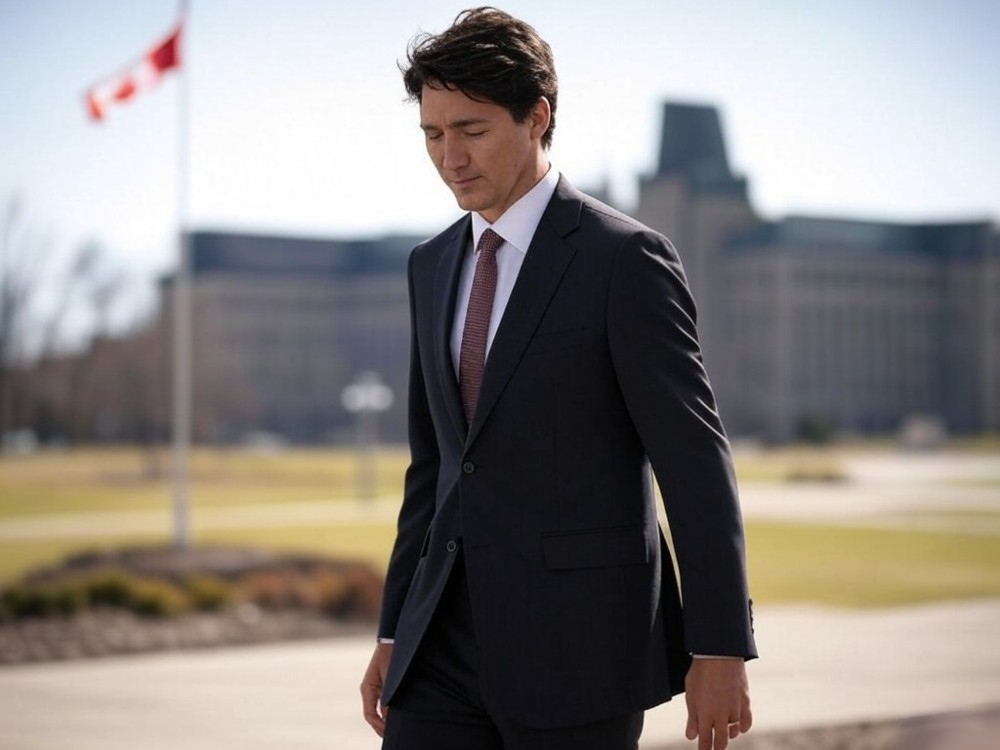
Canada’s Finance Minister Chrystia Freeland has resigned in what appears to be a seismic blow to Prime Minister Justin Trudeau’s leadership, further amplifying speculation that Trudeau’s time in office may soon come to an end. Freeland, once seen as Trudeau’s most trusted lieutenant, cited irreconcilable disagreements with the prime minister over how to confront President-elect Donald Trump’s aggressive economic agenda.
In her resignation letter, Freeland pointed to the “grave challenge” of Trump’s promised 25% tariffs on Canadian goods and expressed deep concern over Trudeau’s reckless fiscal policies. It is clear Freeland sees the prime minister’s decisions as politically-motivated gimmicks, unsustainable at a time when Canada faces serious economic peril. Her departure, coming just hours before a scheduled fiscal update, underscores a government in disarray.
Trudeau’s House of Cards Begins to Crumble
Freeland’s exit represents the most significant fracture yet in Trudeau’s Liberal government, which is already teetering on the brink. Nine years of mismanagement and tone-deaf policies have eroded Trudeau’s popularity. Once riding high with a 63% approval rating, the prime minister now languishes at a dismal 28%, with his government battered by scandals, rising inflation, and a cost-of-living crisis.
Adding fuel to the fire, Freeland’s departure has emboldened Trudeau’s internal critics. Within hours, five Liberal MPs, including Ontario MP Helena Jaczek, publicly called on him to resign. “Firing the finance minister at this critical time is not just ill-advised — it’s indefensible,” Jaczek said. “Trudeau needs to step down before he drags this party into oblivion.”
An emergency Liberal caucus meeting was convened Monday evening amid growing panic, but Trudeau remained silent in his first media appearance since Freeland’s shocking announcement. His refusal to address the public only heightened perceptions of a leader who has lost control.
The Economy in Freefall
Freeland’s concerns about fiscal recklessness cannot be overstated. Canada is already grappling with a staggering C$60 billion deficit — far beyond the government’s projections. Trudeau’s latest vote-buying schemes, including sending C$250 cheques to Canadians and proposing a costly tax holiday during the holidays, seem designed to bolster his flagging popularity rather than address the root causes of economic hardship.
Freeland, known for her fiscal prudence, reportedly pushed back against these measures, warning they would worsen the deficit and destabilise the economy. Even the left-leaning New Democratic Party (NDP), which props up Trudeau’s minority government, rejected the cheque plan as poorly conceived and opportunistic.
Opposition leader Pierre Poilievre wasted no time capitalising on the chaos, calling for an immediate election. “This government is spiralling. The economy is in crisis, Trudeau has lost his finance minister, and now his own MPs are abandoning him,” Poilievre said. “Canada cannot afford this trainwreck of leadership.”
Trudeau’s Leadership: The Beginning of the End?
Freeland’s resignation highlights what many Canadians have come to believe — Trudeau is no longer fit to lead. His increasingly erratic decision-making and inability to maintain party unity point to a government on its last legs. The public is taking note, with polls showing overwhelming dissatisfaction. According to Angus Reid, four in five Canadians believe Trudeau’s recent policies are purely political stunts designed to salvage his crumbling reputation.
The cracks in Trudeau’s leadership extend beyond Freeland. Housing Minister Sean Fraser, another prominent cabinet member, announced last week that he will not seek re-election, citing personal reasons. But for many observers, this signals a broader exodus of Liberals unwilling to tie their fortunes to a sinking ship.
NDP leader Jagmeet Singh joined the growing chorus calling for Trudeau to step down, though he stopped short of pulling the plug on the minority government. “Canadians deserve leadership that will rise to meet this economic crisis. Trudeau no longer commands that trust,” Singh said.
Loyalists Take Over, But for How Long?
Public Safety Minister Dominic LeBlanc, a close friend of Trudeau’s since childhood, was hastily sworn in as Freeland’s replacement. LeBlanc’s loyalty to Trudeau is unquestionable, but his appointment does little to reassure Canadians who view the prime minister’s inner circle as out of touch and unaccountable.
The resignation also rattled business leaders, with the Business Council of Canada calling it “deeply troubling” and warning that Freeland’s departure raises serious doubts about Trudeau’s economic direction. “Whose interests is this government truly serving?” the Council asked in a blunt statement.
The Road Ahead
With Canada facing mounting economic headwinds and the Liberals on the verge of collapse, the question dominating Ottawa is not if Justin Trudeau will resign, but when. Freeland’s decision to stay on as an MP signals that she may be positioning herself as a leadership contender while Trudeau’s rivals within the party sharpen their knives.
Canadians will have their say in the next election, scheduled for no later than October. But if the internal revolt within the Liberal Party continues to escalate, Trudeau may be forced out much sooner. For a prime minister who once embodied hope and change, Freeland’s resignation may mark the end of the Trudeau era — and the beginning of Canada’s path toward economic and political renewal.